
After the U.S. Supreme Court struck down the majority of President Donald Trump’s tariffs, the administration moved quickly to introduce a new strategy aimed at maintaining aggressive trade policies. Within hours of the ruling, Trump announced plans to impose a fresh round of tariffs using alternative legal authorities—signaling that his broader trade agenda remains firmly intact.
The revised approach includes a sweeping 15% global tariff on imports from all countries, replacing the 10% increase previously announced. While the Supreme Court decision limited the president’s use of certain emergency powers, it did not eliminate all available mechanisms for imposing trade penalties.
Why the Supreme Court Rejected the Earlier Tariffs
The high court ruled that the president could not rely on the International Emergency Economic Powers Act (IEEPA) to justify broad-based tariffs. The law grants authority to address national emergencies involving foreign threats, but the Court determined it does not provide a legal foundation for sweeping import taxes.
This decision effectively halted the administration’s previous tariff framework, which had allowed rapid implementation and adjustments with minimal procedural requirements. As a result, the ruling immediately reduced the effective tariff rate paid by U.S. importers and consumers.
According to estimates from Wells Fargo Securities, the overall tariff rate dropped from approximately 16% to 13% following the Court’s decision.
Trump’s New Legal Strategy for Tariffs
In response, President Trump announced he would pivot to other trade laws that grant tariff authority under different conditions.
One of those tools is Section 122 of the Trade Expansion Act. This provision allows the president to impose tariffs for up to 150 days to address trade imbalances. Unlike IEEPA, Section 122 does not require declaring a national emergency, but it does limit the duration of such tariffs.
Additionally, the administration said it would initiate investigations under Section 301 of the Trade Act. Section 301 permits tariffs in response to unfair trade practices, but only after a formal investigation is completed. These investigations can take months, making them slower and more procedural than the emergency powers previously used.
A 15% Global Tariff Plan
Under the new proposal, a 15% tariff would be applied broadly to imports from all countries. This mirrors, in structure, the 10% baseline “reciprocal tariff” introduced earlier in the year during what the administration referred to as “Liberation Day.”
However, unlike the earlier version, the new tariff plan would rely on trade statutes rather than emergency economic powers. Trump emphasized that his administration has “great alternatives” and suggested the revised measures could generate even greater federal revenue.
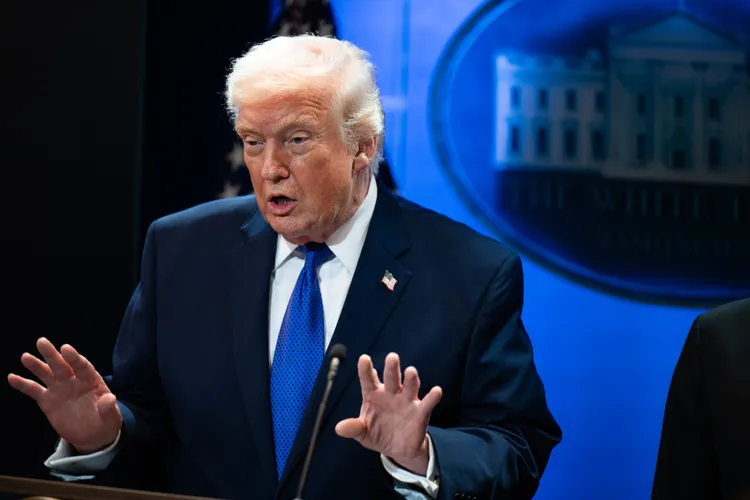
“We have alternatives. Great alternatives,” Trump stated during a press conference. “Could be more money. We’ll take in more money, and we’ll be a lot stronger for it.”
Market and Economic Implications
The Supreme Court ruling had an immediate economic impact by lowering the effective tariff burden on American businesses and consumers. Lower tariffs generally reduce import costs, potentially easing price pressures across supply chains.
However, Trump’s swift announcement of new tariffs introduced renewed uncertainty. Investors and economists are now assessing how the revised measures might affect trade flows, consumer prices, and international relations.
Economists at Wells Fargo Securities noted that while the administration still has authority to reimpose tariffs, none of the remaining options provide the same immediate and expansive power previously granted under IEEPA. The procedural requirements tied to Section 301 investigations, in particular, could delay implementation and limit flexibility.
A Continued Commitment to Tariffs
The episode underscores Trump’s continued reliance on tariffs as a central economic and foreign policy tool. Over the past year, tariff announcements have frequently been made via social media, sometimes followed by rapid adjustments or reversals. The administration has also used the threat of tariffs as leverage in trade negotiations.
With the Supreme Court narrowing executive authority under emergency law, the administration now faces greater legal and procedural constraints. Even so, the president’s quick pivot demonstrates determination to maintain a protectionist trade posture.
What Comes Next?
The next phase will likely involve a combination of temporary tariffs under Section 122 and longer-term measures stemming from Section 301 investigations. Because these legal pathways require more structured processes, future tariff actions may unfold more gradually than in the past.
For businesses and global trading partners, the evolving situation creates ongoing uncertainty. Companies dependent on international supply chains will need to monitor regulatory developments closely as the administration implements its revised strategy.
Victor Maduabuchukwu

Leave a Comment